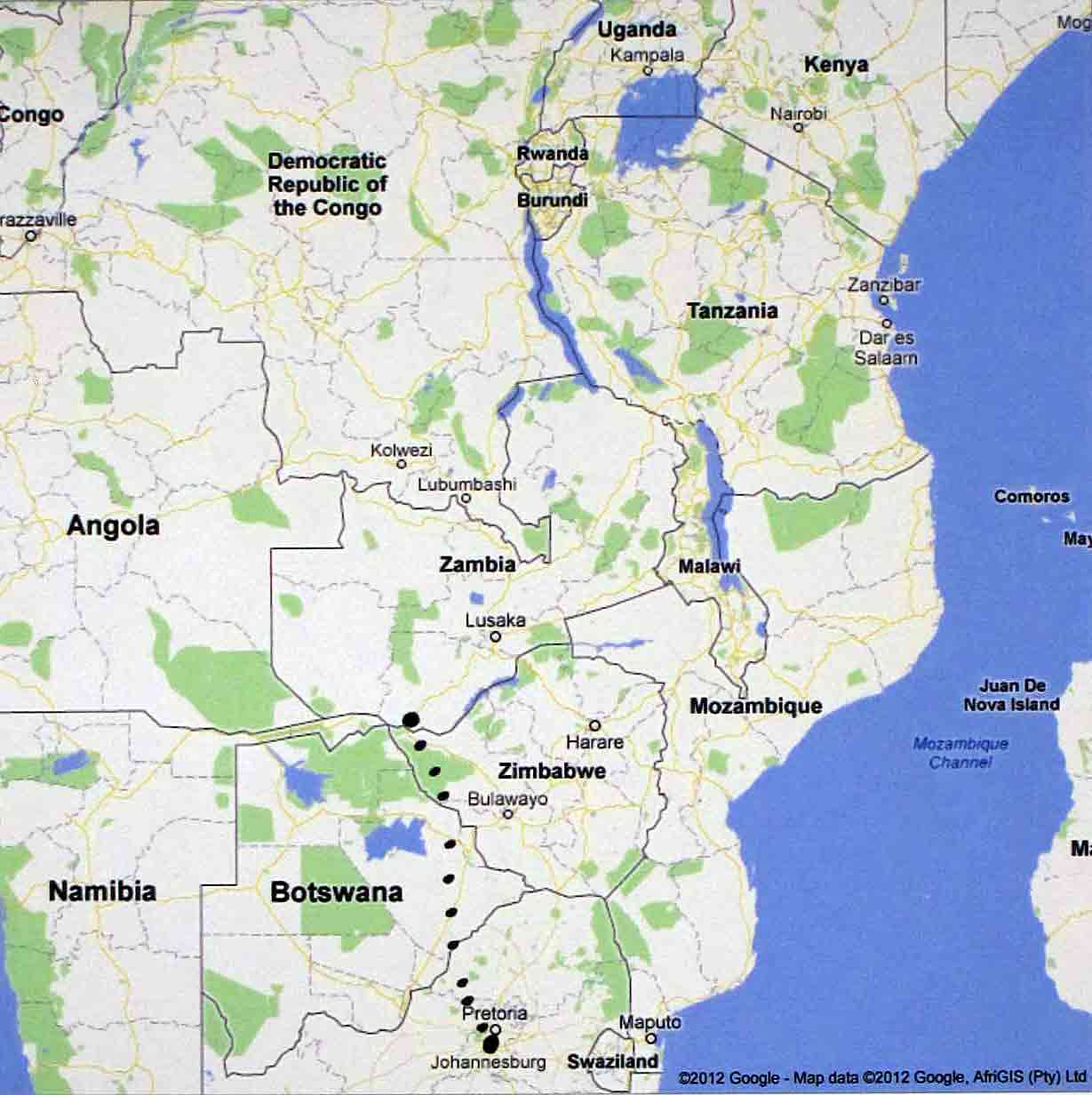
Fly from Johannesburg, SA to Livingstone, Zambia.
The check-in and security check at JNB was a breeze; the security officer even smilingly told us, ” You don’t have to take off your shoes. This is not the US; we don’t have terrorists here.” Our flight to Livingstone was on a South African Airlines (SAA) Airbus A319 and would only take 1 hour fifty minutes. We were “wheels up” about ten minutes late but on the ground in Livingstone on schedule.
Getting off the aircraft, it finally felt like we were in the “real” Africa. The terminal was tiny, had no skyways, and you exited the aircraft down an old-school stairway. On the walk (on the tarmac) between the aircraft and the terminal, you literally could feel yourself walking towards an earlier time… the smells, the sounds, the fine red dust in the air – you could just feel time itself slowing down. Passport Control was merely a stop for a friendly government official to collect $50 USD per visitor (for a Visa) and Customs was even simpler. There were two doors; one for “Goods to Declare” and one for “Nothing to Declare” and there was a table between the doors with two Customs Officers. People just chose whatever door and walked through expecting other Officers. However, once you walked through, that was it…
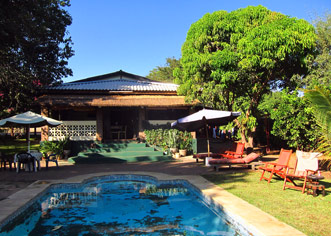
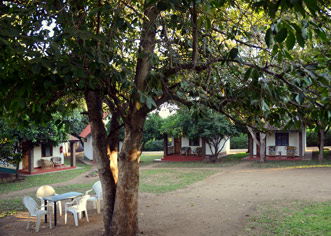
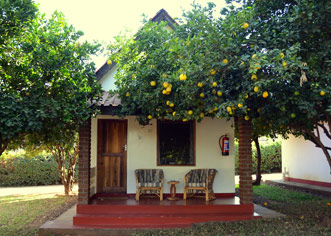
Andrew from, “The Green Tree Lodge” (http://www.greentreelodgezambia.com/), was there to pick us up just as promised. He had us at the lodge and into our our private bungalow (the “Guineafowl Chalet”) in what seemed to be only minutes. The Green Tree Lodge is a quaint little fenced and gated compound off Kombe Road. It is comprised of five “Chalets”, a main house with attached veranda where he dining/living room/bar area for guests is located, a small swimming pool and deck area, and several other service buildings. The grounds are sprinkled with a variety of different fruit-bearing trees and has it’s own resident critters – a pair of Guineafowl hens, a number of pidgeons, and a pair of rabbits. All they’re missing is a couple of people-friendly medium-sized pooches to welcome the guests. The lodge is owned and operated by Andrew and Vickie. Peter is the owner/groundskeeper/bellhop/chef/all-around do-it-all. It’s a quiet little oasis which seems to be quite popular with ex-pats and other non-Zambians who are travelling through Livingstone. The lodge serves breakfasts, lunches, and dinners at very reasonable prices… and the food is extremely well-prepared in a home-cooked, non-pretentious, but professional way. The chalets all feature either twins beds or a queen, a small TV, a bar fridge, air conditioning, a ceiling fan, an ensuite with shower, and a small front porch with two wicker chairs. The only disappointment is the lack of advertised WiFi. All-in-all, I would whole-heartedly give a very positive recommendation for this place. Anyone starting their African adventure in Livingstone would do well to stay at The Green Tree Lodge; it’s a great place to relax and ease into the whole African experience… and Andrew has a wealth of information and recommendations to impart.
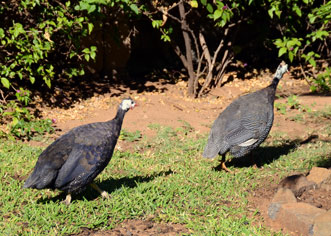
Resident Guineafowl hens: “The Ladies”
NOTE: there is no WiFi due to the February theft of approximately 10 km of local telecom cable; effectively blacking-out the entire area for landline telephone and broadband internet services.
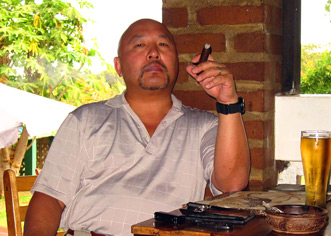
My first “Zambian Cigar”
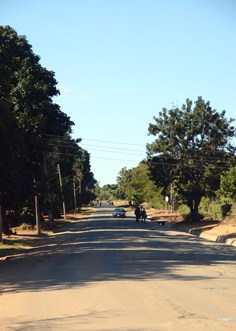 The main business district of Livingstone is but a 20 minute walk away and the trip is safe to do day or night. Alternately, a one-way cab ride is K20,000 (or less than $4 USD). On or near Mosi-oa-Tunya Road (the main drag), you will find a variety of shops, restaurants, museums, and bars. There are also two ShopRite supermarkets; the “new” one ( at Mosi-oa-Tunya Square or simply, the “ShopRite Centre”) features a money market which will exchange currencies at the best rate in town. According to Andrew, you can also exchange money at any of the banks (but at a worse rate) or at the government Post Office (the worst rate of all).
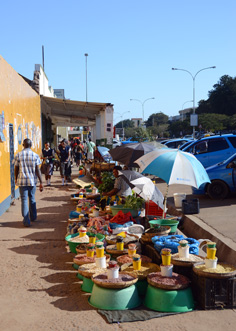
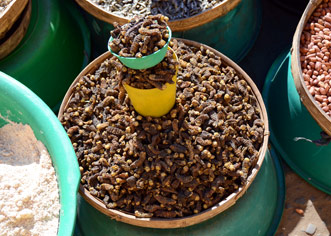
Sun-dried Mopane Worms, anyone?
On our first walk-about around the area, the one thing that really struck us was the sheer number missionary groups and Non-Government Organizations (NGO’s) operating in just our little corner of Livingstone. Andrew later confirmed our observation; Zambia, like most of it’s central and eastern African neighbours, is NGO-central. NGO’s, missionary groups, and (more specifically) the money they bring into the country make up a large percentage of the countries’ economies; the balance of the GDP’s are mostly from tourism and (if fortunate) the export of natural resources. The vast majority of non-Blacks we will meet in Zambia (in fact, all of East Africa) will either be Christian Missionaries or working directly for a NGO.
 East to Hedon
 East to Hedon
Great, Great, write-up Rog! I was wondering what the ratio of NGO’s were to locals!
Scoffed 10k of telephone wire. lol!
love the cottage….how was the cigar?….worms….crunchy?…with beer?…lol…you are living the dream!