It was a rare, luxuriously late start at 7:00 AM. Unfortunately, we didn’t wake up until 6:45 AM, and had to rush. For the first time in weeks, we didn’t wake spontaneously with the dawn, and we both slept through the alarm. Note to self: don’t set the iPod’s alarm sound to “crickets” when the real crickets surrounding your tent are louder.
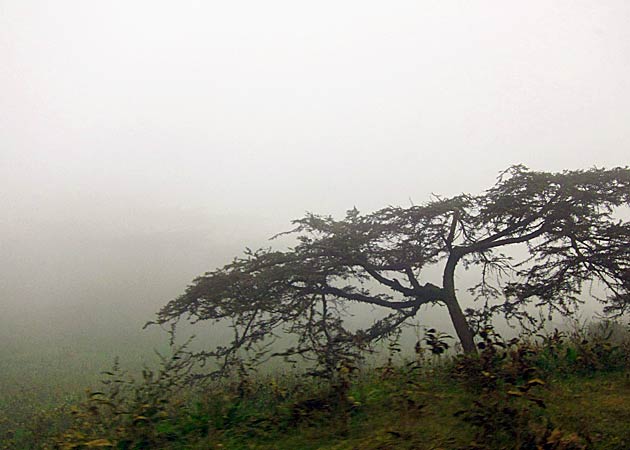
Mist shrouded road to the rim.
As we ascended towards the rim of the Ngorongoro Crater (http://en.wikipedia.org/wiki/Ngorongoro_Conservation_Area), the landscape became lush and green, shrouded in rolling banks of grey mist. The temperature dropped noticeably. At approximately 2,000 meters (6,500 feet) we reached the rim. We now started the 600 meter (2,000 feet) descent to the crater floor along narrow switch backs of red dirt. The turns were abrupt. Sections were very steep, and the drop precipitous. We can only imagine how treacherous the road would be during the rainy season. As we approached the crater floor, the tropic forest began to thin, and we were given teasing glimpses of the great Ngorongoro panorama.
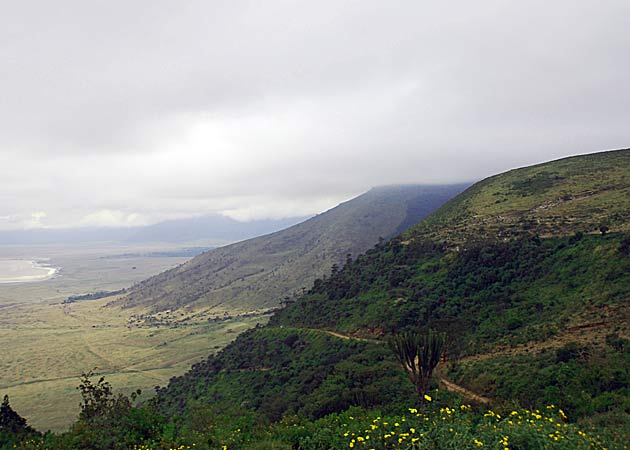
Narrow, twisting road into the crater.
The Ngorongoro Crater is the remnant of the caldera of an extinct volcano. The crater’s floor covers an area of 260 km2 (100 mi2). The height of the rim allowed a naturally isolated ecosystem to develop, with its own resident population of animals. This ecosystem is self-contained, and does not usually experience the annual droughts of the adjacent Serengeti. Nature has created its own giant terrarium. Ngorongoro Crater is densely populated with many of the typical African animals, including the big five.
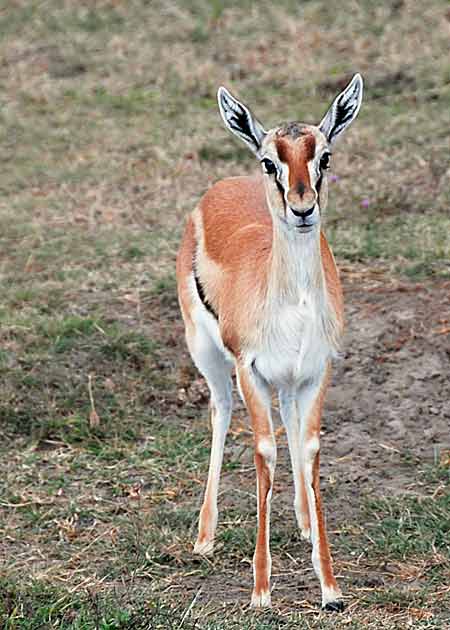
Greeted by a Thompson Gazelle.
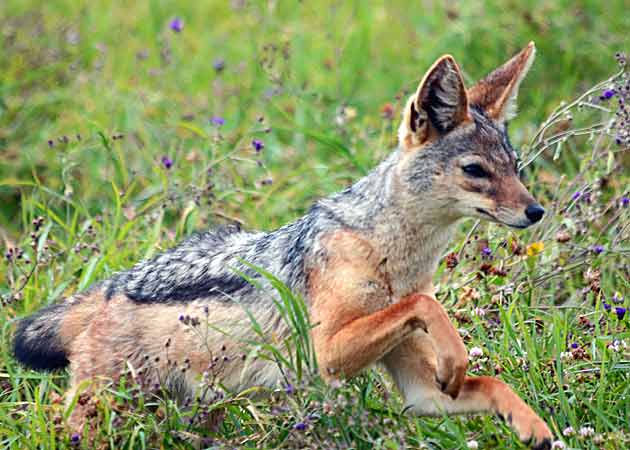
Black-backed Jackal.

Cape Buffalo.
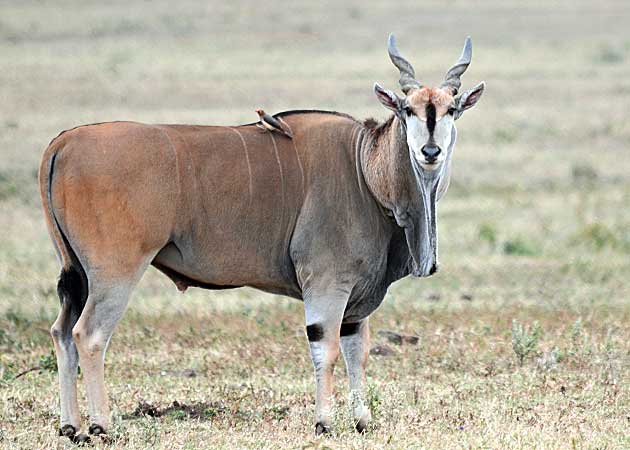
Eland.

Lone Gnu.
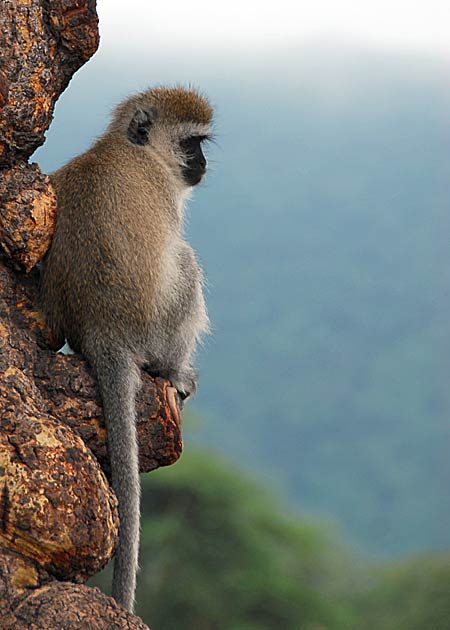
Black-faced Vervet monkey.
The CB radio crackled to life, and a chatter of Swahili followed: Lions had been spotted on the road. We sped off toward the converging trails of dust in the distance. We arrived to find a virtual circus of safari vehicles parked every which way around and in amongst a pride of lions. The lions seem to favour the cool shadows cast by the safari trucks, and would flop down to lay against the tires or under the running boards.

Jockeying for position.
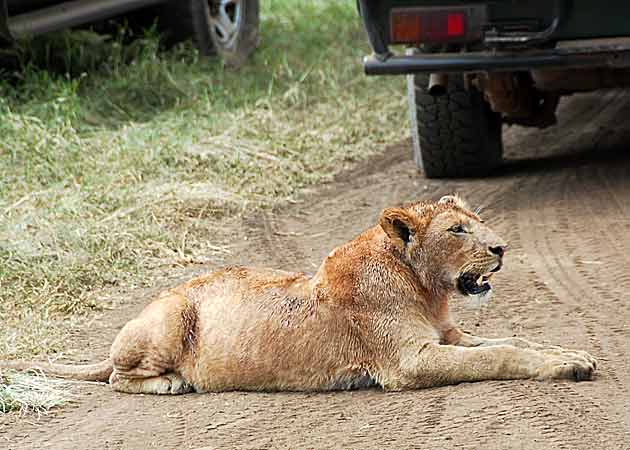
Lions rest where they want to.

Laying near the running boards.

Feel the love.
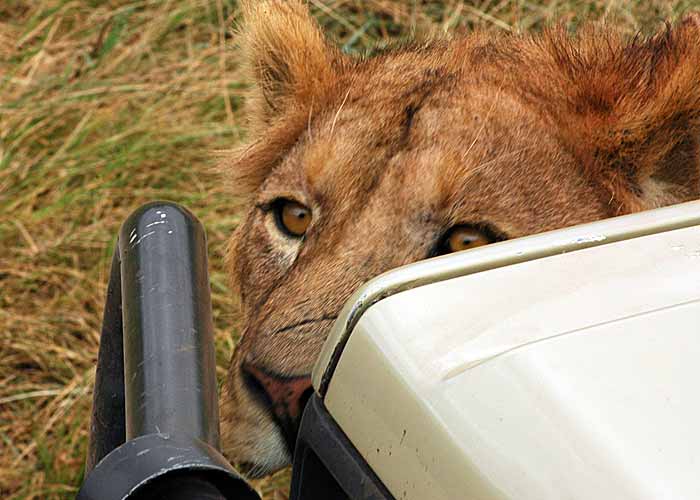
250 lbs of peekaboo.
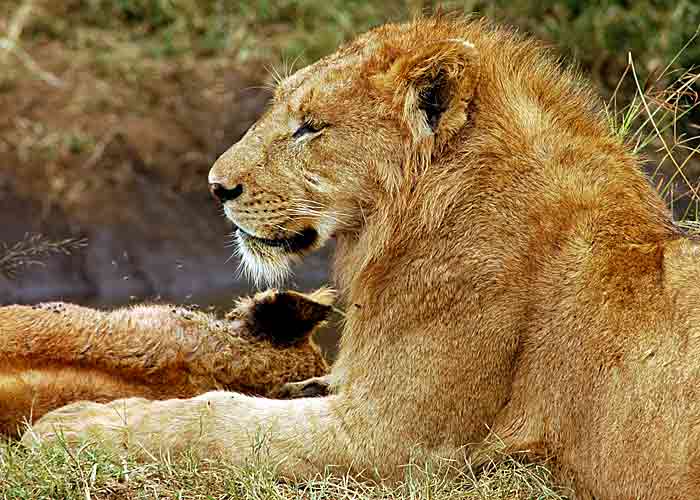
Male Lion.

Just like house cats… but not.
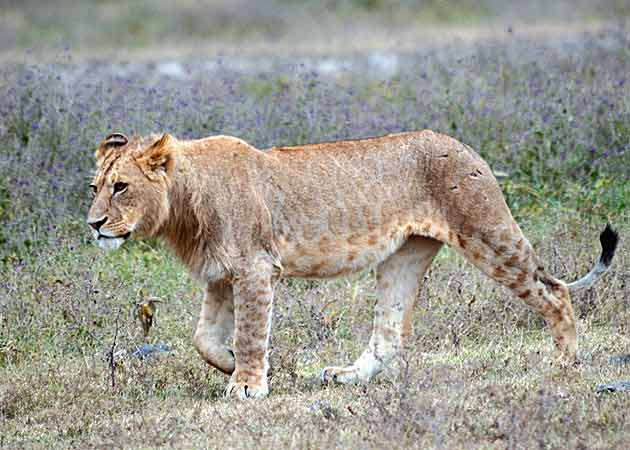
Young Lioness on the prowl.
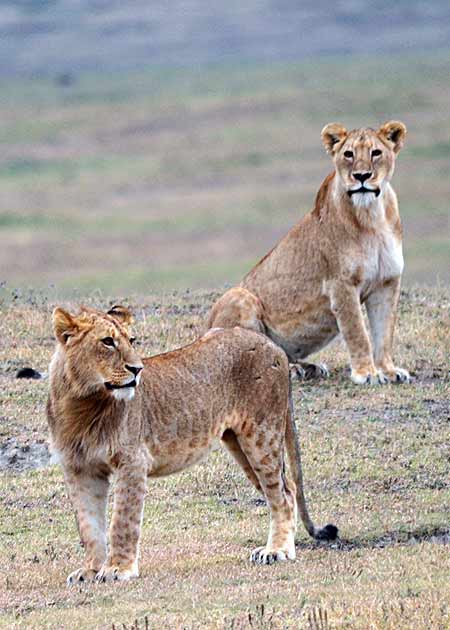
Young Lionesses.
One lioness was scouting for a shady spot, and walked along the length of a truck.
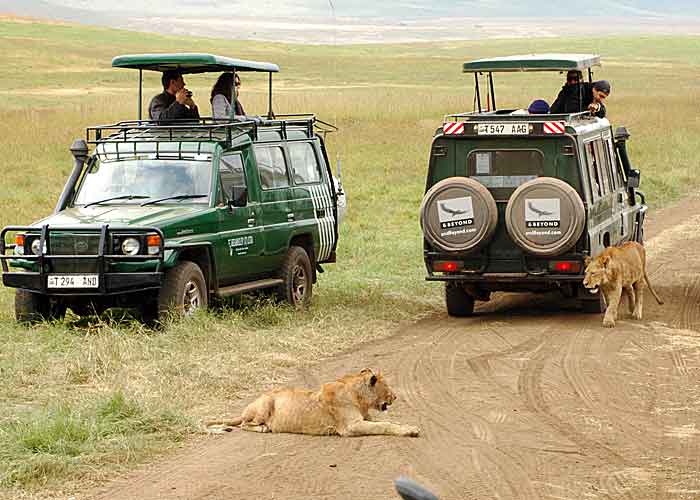
No fear of trucks. Note the Lion walking very close to the truck on the right.
This is when we witnessed an act almost worthy of the Darwin Awards: A woman leaned out of the truck window, reached down, and stroked the lioness from the shoulder to the end of her tail, even going so far as to grasp the tip of the tail. We all watched this in horror, anticipating the more than even chance the lion would rear up and drag her the rest of the way out of the window. Luckily, this didn’t happen.

An intensely stupid woman.
This one thoughtless, selfish action could have resulted in very real and deadly consequences. The woman herself has a right to risk her own life through stupidity, but she has no right to risk the lives of others. If the lioness had instinctively defended itself and mauled the woman, others would have felt compelled to take action. And this was only one of almost two dozen adult lions scattered amongst the safari trucks. This could have easily resulted in serious injuries, or even death, to well-intentioned bystanders. No matter the impression given by Disney, these lions are still very much, wild animals. Note: while David (a Ranger) carried a rifle during our game walk in South Luangwa National Park, firearms are not part of the equipment for the the driver/guides in the safari vehicles.
Technically, we did manage to see the “Big 5”. But the two Black Rhinos we spotted were about 3 km (2 mi) away and moving farther with each step. Wish we could’ve gotten closer but the safari vehicles are not permitted to leave the roads.
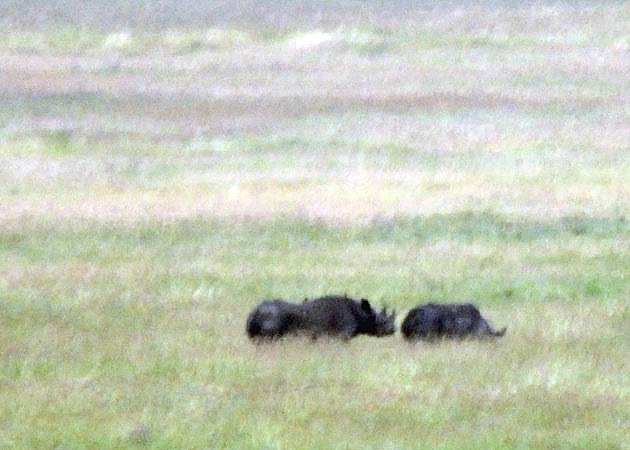
Two Black Rhino – far, far away.
 East to Hedon
 East to Hedon
Stunning photos guys….unfortunately you are 100% correct…it amazes me how incredible people are with wild life…”w-i-l-d l-i-f-e”….gee…word comprehension 101.!!!
Sad thing is that some beautiful animal will pay the price for some idiots stupid actions!
Luckily for the animals, the African Rangers (unlike North American ones) will not always put them down for messing up idiot visitors. If the animal is regarded as “defending” itself against the actions of the human, the animal would not normally be harmed by the Rangers unless it is an immediate danger to other people at the scene.
Roger
I can’t believe you caught that one for posterity. (the petting zoo one, scary…)
Great pics!
Ngorongoro – what an amazing place. We were lucky enough to have a guide sensitive to the “circus” atmosphere that happens when radios crackle with “Lions!” So we would have our time with them and then radio, driving away as the herds of vehicles descended. Such a stupid woman and such an amazing shot! I hope she was lectured afterwards!