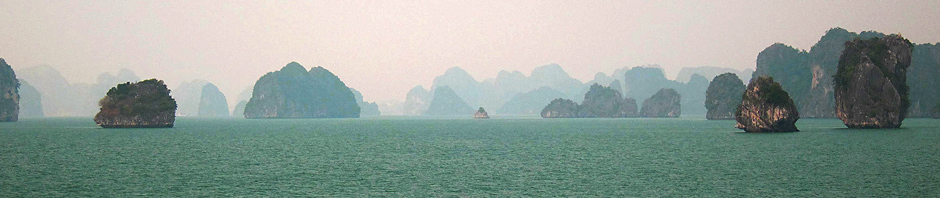

Amboseli National Park to Tsavo West National Park, Kenya.
We noticed a subtle difference in our passenger load this morning as a smartly dressed young man climbed into the front passenger seat carrying his briefcase, walkie-talkie,… and an AK-47 Assault Rifle. Patrick introduced us to Samwell, our askari (an armed guard or escort) for the trip between the parks. They didn’t mention this in the brochures, but apparently we were going to be driving through “bandit country” to get to Tsavo West National Park (http://en.wikipedia.org/wiki/Tsavo_West_National_Park). Patrick told us that all the safari companies have made arrangements with the Kenyan Army to provide detached-duty soldiers as armed escorts. In addition, the safari groups were required to travel in convoys of at least two vehicles. Unfortunately, our trip was uneventful. Being attacked by bandits in backwoods Kenya would have been another check mark on the ol’ bucket list.
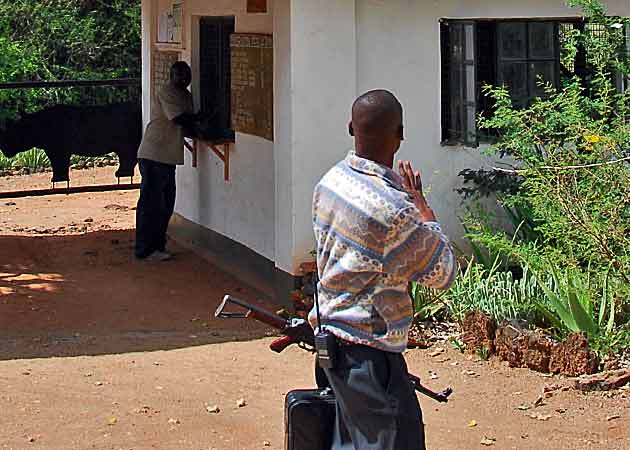
Our Askari saying goodbye to Patrick at Tsavo West gate.
As we left Amboseli and headed to Tsavo West, the landscape went through a dramatic transformation in just a couple of hours: from savanna and woodlands to the hilly cinder cones of extinct volcanoes. Roger felt the highlight of the drive between the parks was a huge lava field that was the result of multiple eruptions a hundred years ago; the Shetani Lava Flow. The resemblance to the Big Island of Hawaii is uncanny.

Shetani Lava Flow.
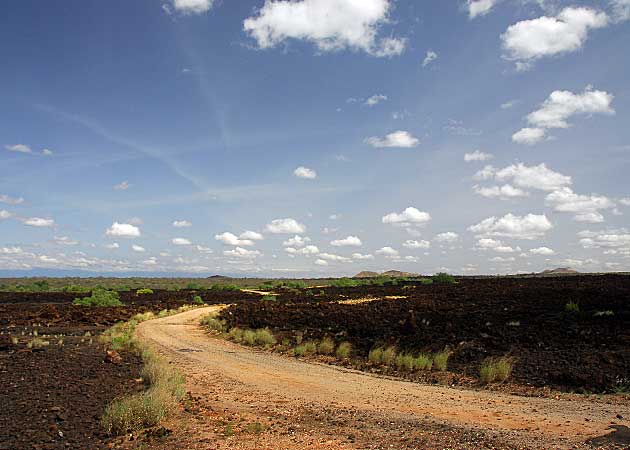
Road through Shetani Lava Flow.
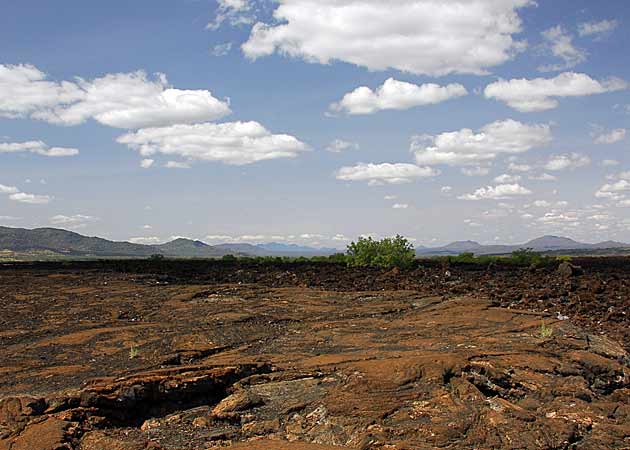
“Shattered” lava.
Eron, on the other hand, thought the highlight of the drive was seeing Kili’s peak again. Roger said with a smile, “been there, done that, got the t-shirt, even sent postcards”… Brett?
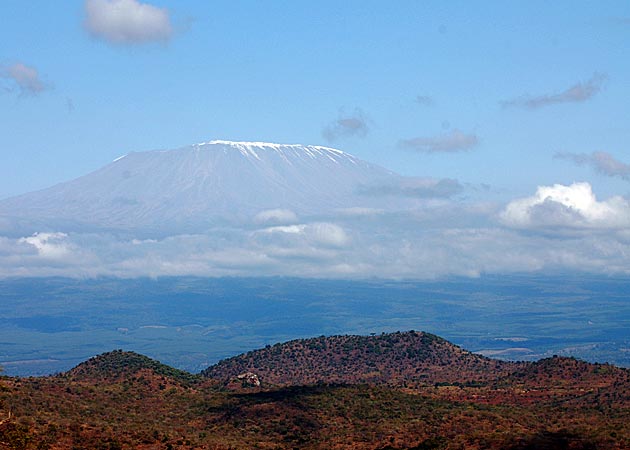
Kili from road to Tsavo West.
Shortly after entering the park, we saw a few Grant’s Gazelles, and asked if they are the smallest antelope. Patrick told that they are the second smallest, with Dik Diks being the smaller at about 7 kilograms (about 15 pounds). As if on cue, within a few seconds, we saw our first Dik Dik peeking out at us from the bush. They travel in mated pairs, and are like a Disney drawing come to life – incredibly tiny, huge dark eyes, graceful, and fairy-like. They are also shy and bound away very quickly, making it difficult to get a good photograph.
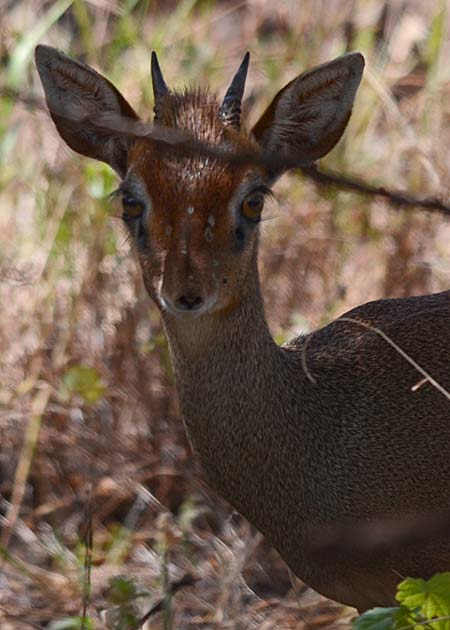
Dik Dik
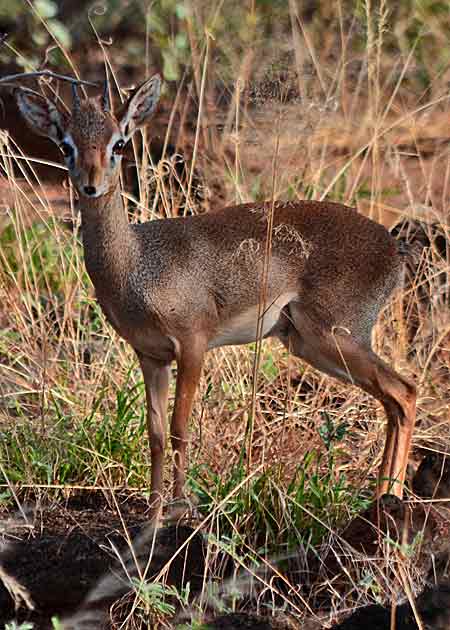
Dik Dik – tiny 7 kg antelope.
The best part of the Serena Kilaguni Lodge (http://www.serenahotels.com/serenakilaguni/default-en.html) was walking through the reception area and seeing a breathtaking vista unfold before us. The bar and dining room are open air, with an unimpeded view of the valley below, the watering holes, and mountains in the distance.

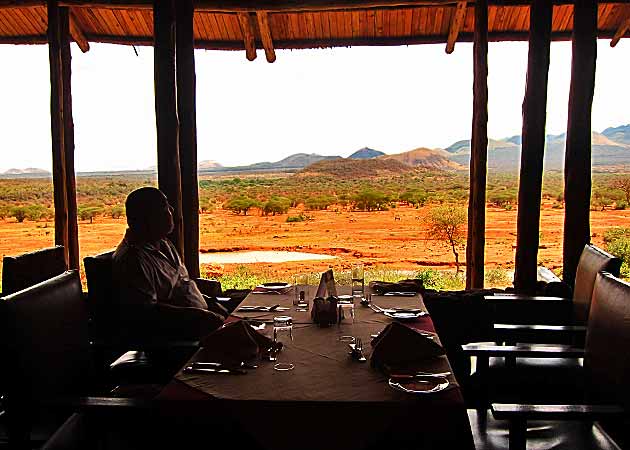
View from dining room.
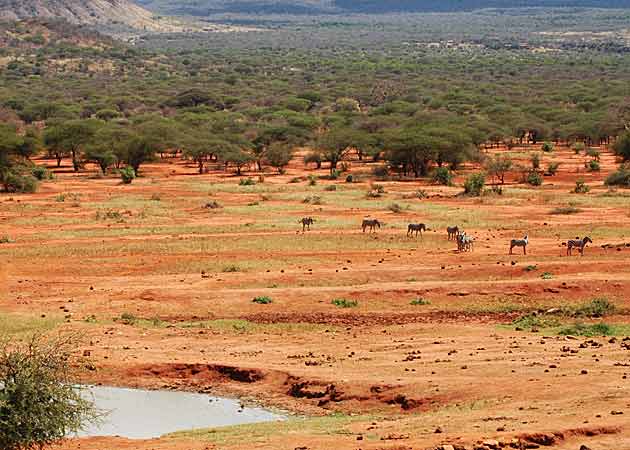
Watering hole and landscape beyond.
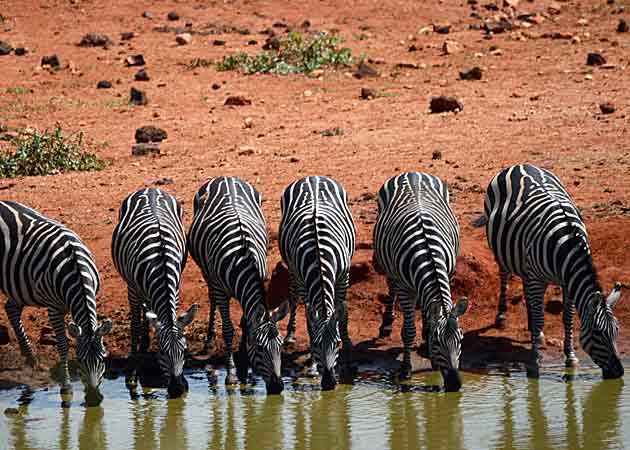
Lined up at watering hole. Photo taken from our room’s patio.
Before we left on our afternoon game drive, we drove over to the Kenyan Wildlife Service (KWS) compound to pick up our guide, Salome. She is a Ranger with the KWS and had been contracted to be with us at Mzima Springs (http://en.wikipedia.org/wiki/Mzima_Springs). Our visit to the springs would involve an approximately 1 kilometre walk through the wilderness and she would serve as our guide and protection from animals; she was armed with an ancient but very serviceable “Jungle Variant” Lee Enfield bolt-action rifle. Mzima Springs is a vitally important source of potable water as well as providing a drought-free localized ecosystem. In fact, the springs’ flow-rate is high enough that they supply drinking water for the city of Mombassa on the Kenyan coast.
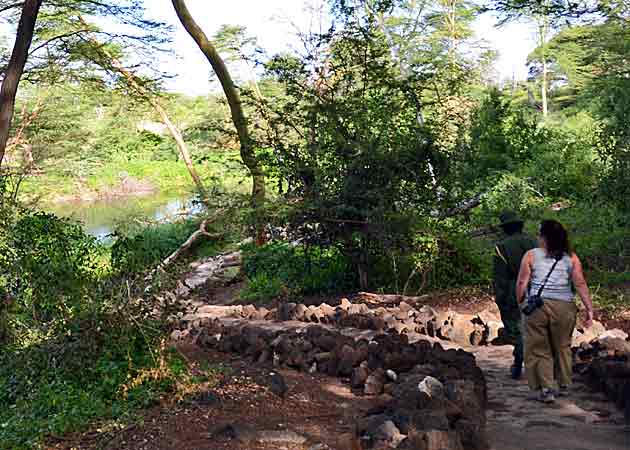
Walking to Mzima Springs with KWS Ranger.
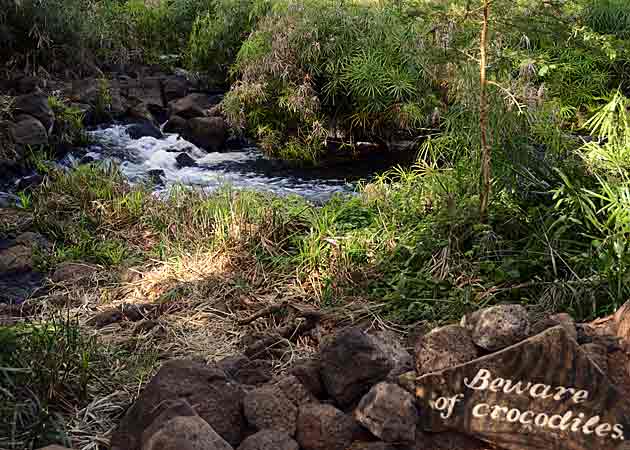
Mzima Springs. Note the “friendly reminder” sign.
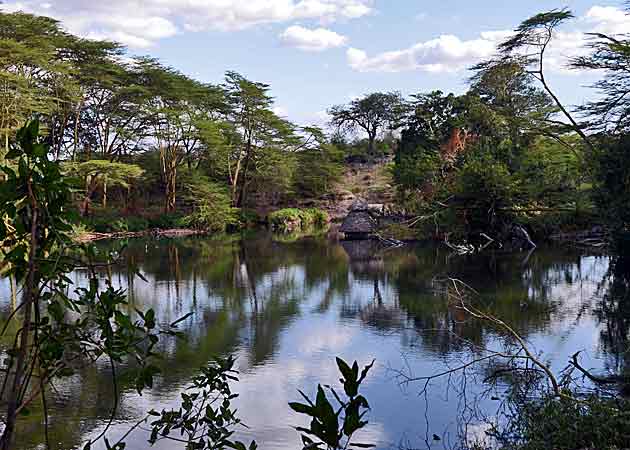
Small lake at Mzima Springs. The small “hut” near the centre of the image is the “Tank”.
Our walk to the springs was uneventful. We were able to sample the spring water right from its source, although we had to keep an eye out for Crocodiles. Downstream from the springs, there is a small lake. The water is remarkably clear so, the KWS took advantage of this and installed “The Tank”. The Tank is basically a large metal cylinder with a sealed bottom placed into the lake vertically. There are stairs leading down from a doorway above the water level and the area at and slightly below water level is equipped with a series of viewing windows. Visitors are encouraged to watch the fish and, if they’re lucky, see a crocodile or hippo swim by.
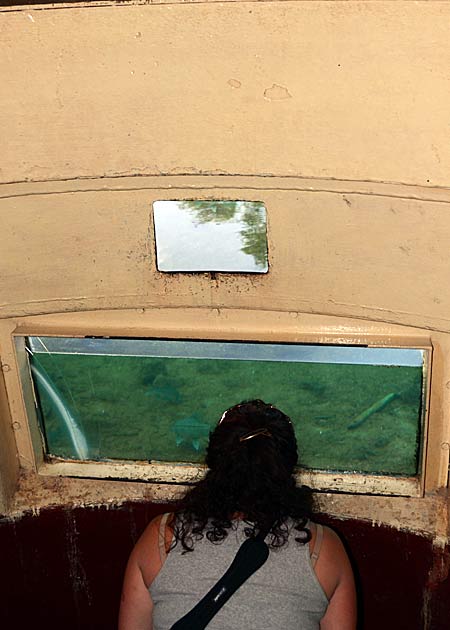
Eron looking through window in the Tank.

We only saw fish… no Crocs or Hippos.
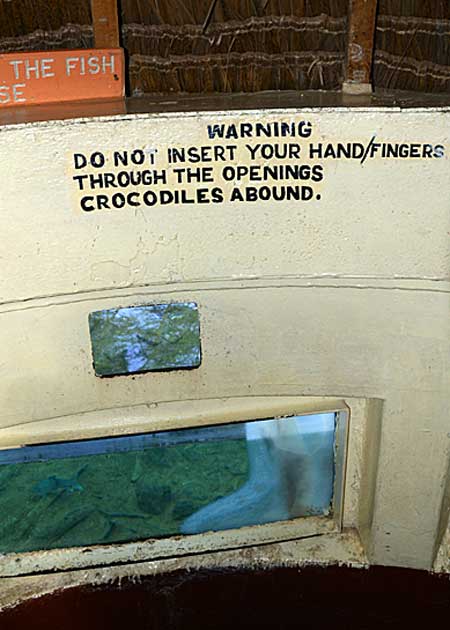
Warning for visitors to the Tank.
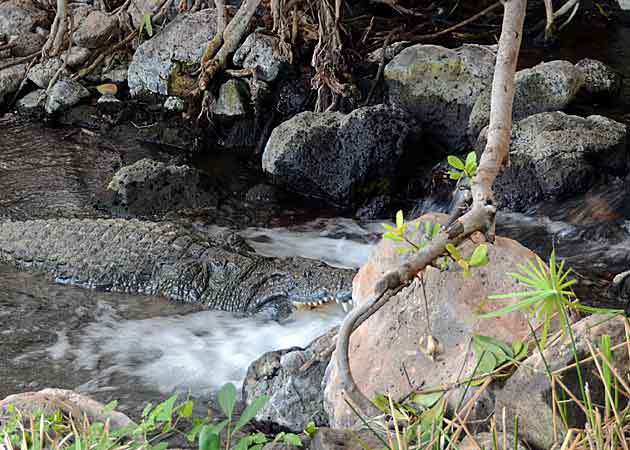
Croc positioned to trap fish coming downstream.
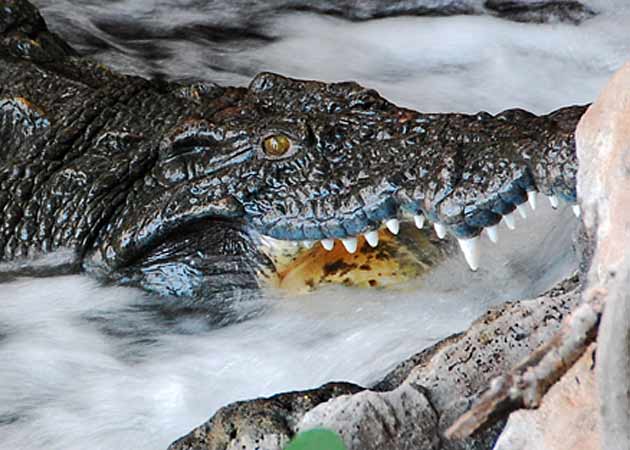
Close up of croc. Note all those clean white teeth….
After our walk, we continued with the afternoon game drive which included going up to an observation post at the top of a cinder cone called, “Poachers Lookout”. Due to its panoramic view, this peak is routinely used by the KWS to observe the movements of poachers in the valleys below.

Panorama from Poachers Lookout.

Cinder cone landscape.
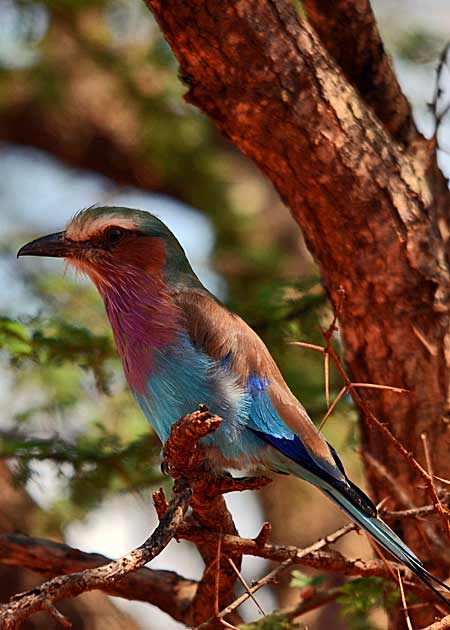
Colourful – whatever he is.
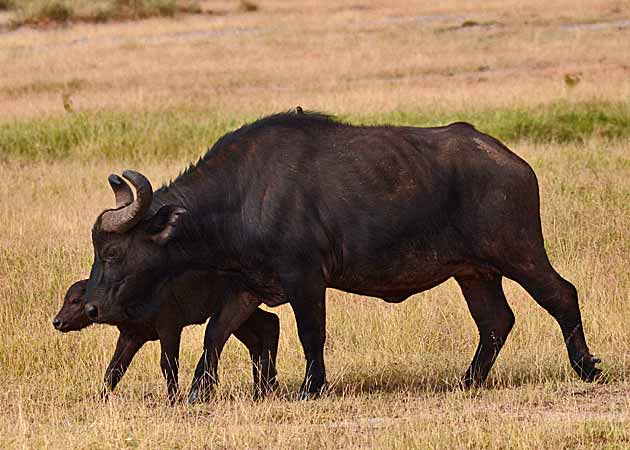
Cape Buffalo and calf.
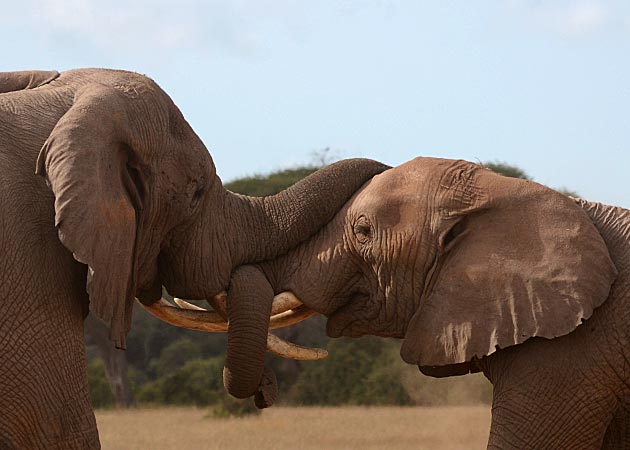
Young eles play-fighting.
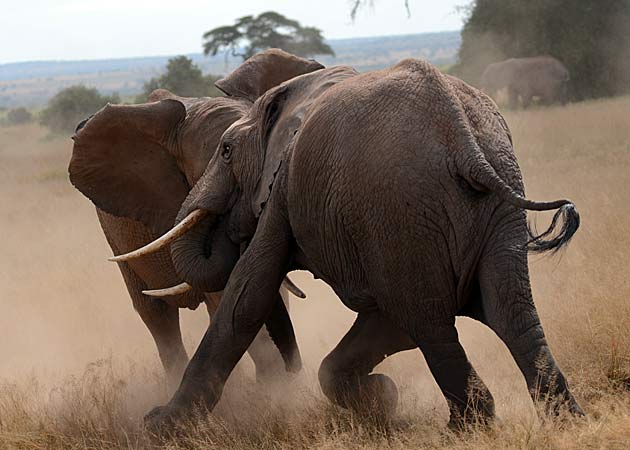
Their play can get very rough.
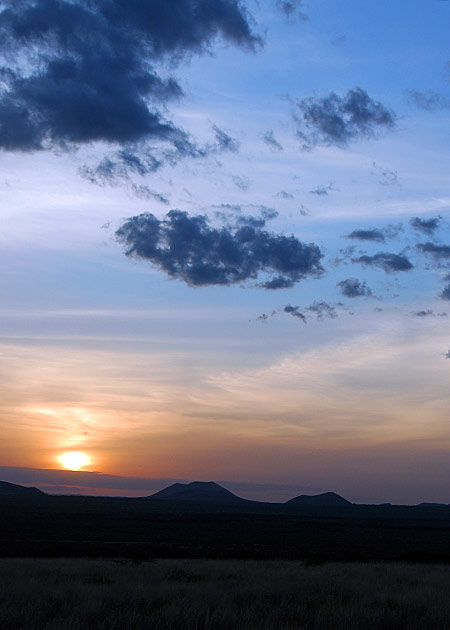
Sunset over Tsavo West.
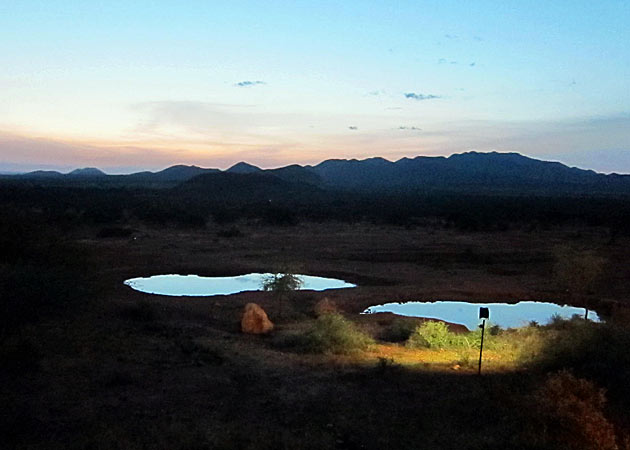
Dusk over hotel’s water holes. Photo taken from our room’s patio.
During and after dinner, we were entertained by a stream of different animals coming to the watering holes. The animals included Eland, Bushbuck, Giraffe, Gazelle, and Cape Buffalo.
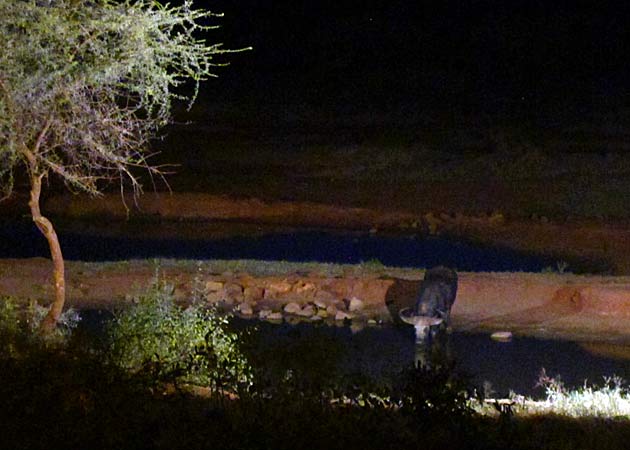
Cape Buffalo drinking at night.
Just before climbing into bed, Roger decided to go out onto our balcony to check on the watering holes. At first, he didn’t see animals at the either of them. However, after a few moments, he noticed some movement at the base of one of the light poles. He got his camera and with the lens zoomed to its maximum 750 mm, was able to finally make out the source of the movement; as correctly identified by Steve, a White-Tailed Mongoose.
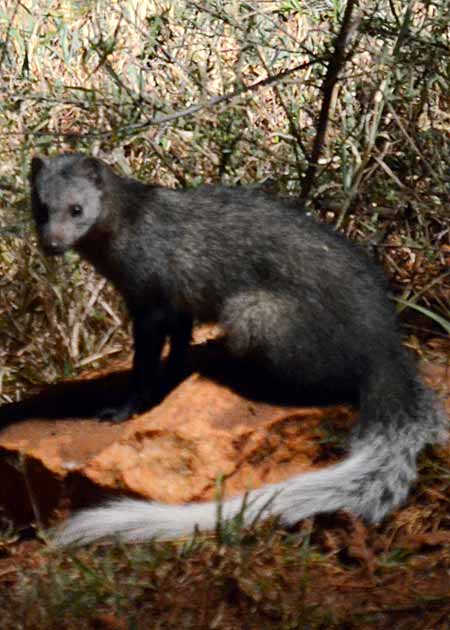
White-Tailed Mongoose.
 East to Hedon
 East to Hedon
wow..terrific stuff….kinda like today,,,I went down to my boat and was followed by a guard with an assualt machine pistol…was raining…guess unberallas not required…love the pics love the articles…love you guys cheers from mexico…!!!
Such an amazing adventure! I know someone else who has done a similar trip and Africa gets under your skin, and in your nostrils, down into you lungs and penetrates your very being. You will be changed your whole life for this. thanks for sharing!
.
The waterhole views at Kilaguni make a great place for a sundowner ….or three.
I’m afraid your “Honey Badger” is a White-tailed Mongoose.

Honey Badgers are like Tasmanian Devils on steroids. We came across one in Tsavo East but survived to tell the tale. He mauled our vehicle tyres, threatened our driver and then held my family to ransom before slipping back across the Somali border with some hard boiled eggs and a bag of beef jerky. 😉
Great blog!